CW: religion, potentially upsetting philosophy, identity, gender, sexuality
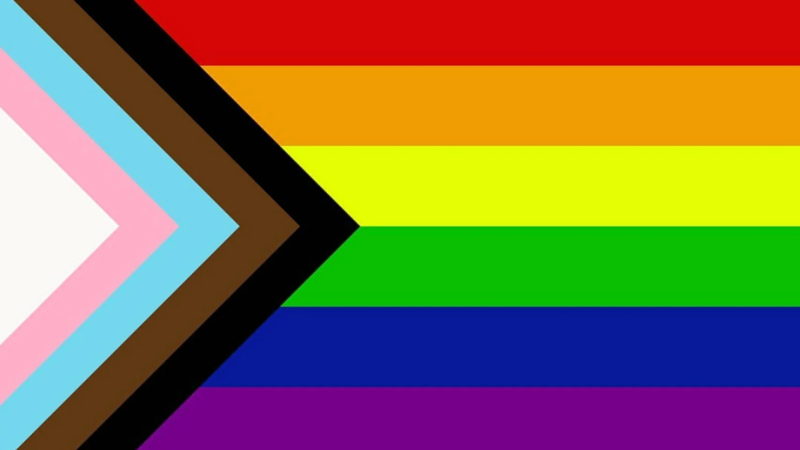 My wife recently told me that sometimes people ask her what my orientation is and said that she doesn't 100% know how I label myself.
If there were ever a good example of a million-dollar question about myself to which I'm not even sure I have the answer...
Not to say I haven't given it plenty of thought, I'm actually rather pleased with myself that the question has driven a serious amount of internal pondering. But the question and its answer are some of the most difficult self-reckonings to be had, and even then, I don't BELIEVE that my answer would end up being satisfactory to everyone, even to those who might claim to operate within the same space of "inclusiveness". But that will take a bit more explaining.
People like labels, and symbols, and associations. It makes them feel part of something, to be able to join with others as part of a cause or identity that they feel is integral to themselves. It feels GOOD. And I would know it better than anyone, I grew up in a ultra-conservative Christian household.
By way of as non-condescending a crash course as I can manage, everyone knows that there are different denominations within Christianity, and those denominations do not necessarily like being lumped in with the others. The most obvious on its face is that Protestants take umbrage with being lumped in with Catholics. In my church growing up (a Baptist church in New York) Catholics were considered to be non-Christians. They were basically as theologically in the wrong as non-believers.
But that's not the end of it, either. Within Protestants, there's Baptist, Methodist, Episcopal, Pentecostal, Wesleyan, Presbyterian, and those are just the ones I can reel off the top of my head. A more enthusiastic Christian might be able to expand that list even further, and I'll tell you why: because they associate specific teachings or practices with those labels. Even within my own church while I was there, there were even smaller labels: how many points of Calvinism do you accept? What is your stance on the gap theory? Early, mid, or late tribulation? These small pieces of dogma ended up shaping people's perception of you, even within the in-crowd of my Baptist church. People believe different things about what Christianity is, what it includes, what it means to state, "I am a Christian."
I am not a Christian. That label is no longer good enough for my expectation of ethical and moral fiber I demand of myself, and of my friends.
There are pieces of my identity that are easier to spell out. I'm cis, I'm white, I use he/him pronouns. All non-controversial (unless you take issue with pronouns, but I'm not going to deign to argue with anyone who objects to the use of pronouns).
I was born male, and am male today. I would not categorize myself any further than that as far as my gender goes. I suppose some in society would say say that I do not conform to their particular perception of male, which is fine. I don't care about what they think, I have molded myself into what I like, based on what I believe. I care about holding to my personal principles of goodness towards others, even if they are not like me. I will not challenge someone's expression of their identity, only their principles. These days, I generally do not challenge people's principles either, I simply do not interact with those whose principles don't align more or less with mine. And right there, in that simple sentence, is why I talk to my still-Christian family less and less.
If there were a choice between straight and queer, I'm definitely more queer than straight. To an outsider, I can easily pull off straight. Not because I want to, or am trying to, but because I generally don't have a ton of public expression that includes queer icons, images, or labels. And I want to be clear, it's not because I'm hiding it, but I feel like video games and their stories are more central to my identity than who I am attracted to.
And I want to pause here to try and communicate something deeper. I have wrestled with this lack of queer expression for AGES. I know that I'm queer, I have queer friends that I love and care for deeply, my wife is queer by her own admission, and the inclusiveness of the queer community is more meaningful to me than I can properly express with words. But of all the people who will observe me meandering through life (at the supermarket, on the road, on a Zoom for work, at a gas station, on the sidewalk), only a fleetingly small fraction will ever see me express myself adjacent to queer iconography, and most of those people I call friends already.
Should I be more out? Should I buy more queer t-shirts, hang pride flags in my home office, talk about queer things more openly and often? Am I failing to uphold the dignity and message of my fellow queers?
If you're also queer, and if that previous set of questions sounds utterly absurd, I guarantee you if I swapped queer for Christian, the Christians would come barrelling into the conversation screaming "YES!"
And therein perhaps is part of MY personal problem with labels. But it is far from the only part.
I will pause here to give the reader the opportunity to close this conversation and reminisce without becoming uncomfortable, because the next thoughts I have would be considered by some (and certainly aforementioned Christians) to be uncouth and unseemly in a public forum. Here comes the sex.
Everyone in today's day and age is familiar with the labels of lesbian, bisexual, gay, transgender, etc. In my lifetime, the moniker went from LGBT to LGBTQ to LGBTQIA+ and I'm sure there's discourse around that label that I'm not aware of. It's not really that important to me to know the ins and outs of it. Suffice to say that the LGBTQ label has evolved, much like the pride flag itself, and there's a reason for it. Other people, who identify as things like asexual, demisexual, pansexual, intersex, and more, like to adopt those labels as part of their identity expression. As those groups petition the broader queer community, the label evolves to try and wrap its arms around everyone who identifies slightly differently than their neighbor. It's not perfect, but there is clearly effort.
I've already expressed to you my gender, my pronouns, my more clearly visible identifiers, and at least one of my less visible identifiers. But simply saying "I'm queer" is often not enough for some people. Anyone in the queer community can instantly imagine the immediate follow-up question one would get, even if you were in a queer-friendly space: "Oh, are you gay? Bi? Pan...?"
The more progressive in the queer community might perceive that follow-up question as rude and lacking tact. A perceptive person might immediately infer that by aligning oneself as queer instead of anything else, they are deliberately not aligning themselves to any of the other labels, for any number of personal reasons. And if you know anything about people, there are assholes even in the queer community. Go on a discussion board for bisexuals and drown in the stories of people who were castigated by a fellow queer that they "simply haven't picked men or women" or they "settled for the wrong gender" or other such batshit nonsense. The toxicity is especially bad for married bisexuals.
I'll give you at least one reason why someone might be averse to using a label such as bi or pan. To them, their sexual identity is coupled very, very closely with their sexual desires and expression. What I mean by that is that a man might believe that by simply saying something like "I'm gay" to another man, that their admission will be perceived as open sexual attraction to the person they're talking to, or an invitation to discuss their sexual preferences further.
I say again, dear reader, if you read that and you think "that's absurd", I applaud you, because all I have to do is swap gay for Christian, and know with absolute certainty that two Christians meeting each other in such a way would immediately result in the conversation diving into all the bits and pieces of religion and dogma they share or do not share, and depending upon the participants, the level of zeal could be very unseemly. I know it because I have LIVED it.
For me, it took a lot of personal soul-searching to decouple sex from sin. And I'm still working on it. Nobody knows that better than my wife. But it makes me very hesitant about applying a sexual label to myself.
For some, attraction and arousal are closer bedfellows than others. I wouldn't say that I think they're always one and the same, but I would say given the right level of hormonal state-of-being, they absolutely can be. I still think that it's no excuse for not exercising self-restraint and decency. But you'd best believe that nearly everyone who is sexually active has sexual fantasies, and chances are if someone is attractive, they're going to wind up in someone's mind during a moment of heightened arousal.
I can easily say I'm not straight, and it doesn't take a stupendous amount of brainpower to work it out; I have looked at women go by and thought to myself "holy shit, that's hot", I have looked at men go by and thought to myself "holy shit, that's hot", I have looked at people who I cannot figure out what gender they are attempting to express and thought to myself "holy shit, that's hot". Every woman? Every man? Every person? No, and it's untruthful to say otherwise. I definitely have types of people I'm more attracted to. And some of my attractions are more than skin deep. For some, like the demisexuals, attraction is ALWAYS more than skin deep. I don't think it's a mystery that people can grow more attracted to each other the more familiar they are with each other, and that looks do not a sexual desire always make.
But let's approach the uncomfortable truth. Yes, I have sexual fantasies about people I see out in world. Yes, I am aroused by things that I see when browsing on the Internet, whether I meant to seek it out or not. I have mischievously thought to myself about my group of friends and internally said "would". I've discussed other's looks with my wife and declared to her that I find them attractive. And no, we don't find that rude or unhealthy, or impolite to each other. I'm pretty happy that we converse on that level. I live with rising and falling arousal, I have to navigate my carnal desires and temper them with my self-discipline and respect for others.
Now, imagine trying to wrap all that up into a simple: "I'm pan."
THAT is the problem with labels.
Comments
No comments yet. Be the first to comment!
Add a Comment